

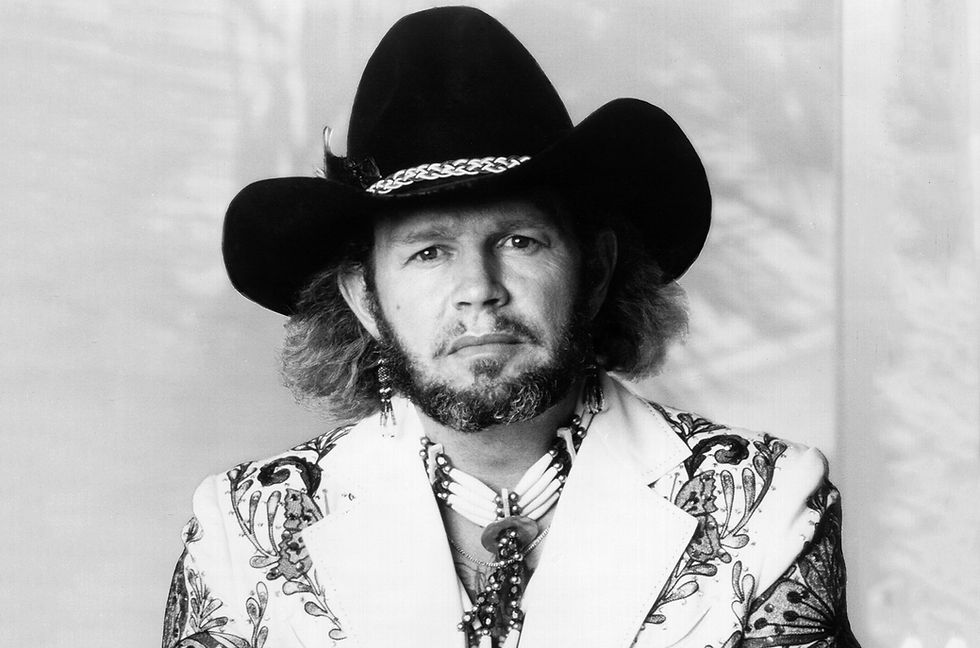
RIP DAC: The Legacy of David Allan Coe
- Brad Beheler

- Apr 29
- 3 min read
“'Cause I can sing all them songs about Texas…”
You can’t tell the story of Outlaw Country or Texas Music’s rise alongside it without running into David Allan Coe somewhere along the way.
Not always front and center. But there, nonetheless. A presence, force and reminder that this music was never meant to be polished smooth.
For me, it started early. I can still hear “You Never Even Called Me by My Name” cutting through a Czech wedding reception in Tours, TX. I was 9 years old, watching a room full of adults sing every word like their lives depended on it. That “let me, let me, let me” refrain has a way of latching onto you before you fully understand why.
Not long after, I found a greatest hits cassette of DAC’s in my dad’s collection. Eventually it turned into a CD of my own. I wore it out the way you’re supposed to. Backroads, windows down, songs rolling. Right there alongside Gary Stewart, Skynyrd and Bocephus.
That music continues to live on and grab a new batch of teenagers each year.
David Allan Coe was a songwriter at heart.
“Take This Job and Shove It” became a working man’s anthem. “Would You Lay with Me (In a Field of Stone)” showed a completely different side. Quiet, stripped down, and heavy in a way that stuck with you. Two ends of the spectrum, same writer.
During my own brief run playing campfires and dive bars, “Longhaired Redneck” was always in the set. It never missed. It told the room exactly what kind of night it was going to be. Or should be.
And if you ever needed a reminder that DAC wasn’t just playing a role, you only had to see him live.
I was working at River Road Ice House in New Braunfels in the early 00s when he showed up one night.
Late. Frazzled. Rasta dreads, Garth Brooks mic in hand.
When he finally hit the stage, he opened with an apology about where he’d been and it only got more unpredictable from there. “I was up all night doing dope with Dimebag Darrell and his old lady.”
He then barked at his drummer, drifted into songs off that notorious underground record, and for about 90 minutes it felt like anything could happen. And all of it did. A couple fights. Multiple medleys. A collected paycheck.
Then just like that, he wrapped it up talking about heading to Lake Charles to play slots and raise hell…and he was gone.
That was David Allan Coe.
At times, he felt less like a traditional country artist and more like a full-blown wrestling character…something out of the WWE playbook.
Nobody ever really knew where the gimmick ended and the man began. Tall tales, half-truths, outright lies. All of it mixed together until it became part of the legend. And somehow, it all fed the songs.
He came up in the same orbit as Willie Nelson and Waylon Jennings, artists who found freedom outside the Nashville machine and helped redraw the map. While they became the faces of the movement, DAC often felt like the shadow just off to the side. Writing, recording, and living in a way that matched the mythology people wanted to believe about the word “outlaw.”
His appearance in Heartworn Highways cemented that image. That film captured a scene that was as much about lifestyle as it was about songs, and Coe didn’t look like he was playing a part…he looked like he was the part.
And then there’s “Willie, Waylon and Me,” which might be the most honest thesis statement he ever recorded. It’s part tribute, part self awareness, part acknowledgment of where he stood…and where he didn’t.
His catalog shares DNA with the Red Dirt and Texas Music artists who followed in his wake. Raw, unfiltered and more concerned with truth than polish. The kind of music built in dancehalls and back rooms, where authenticity still matters more than perfection.
But you can’t talk about David Allan Coe without acknowledging the weight that comes with his legacy. Parts of his catalog and persona pushed boundaries in ways that remain controversial. It’s not a legacy that asks for easy agreement.
What is undeniable is the imprint.
David Allan Coe helped shape the idea that country music could live outside the lines. That it could be independent, defiant, and unafraid to show its scars. That idea took hold in Texas and never really let go. It’s still here.
He didn’t fit cleanly anywhere. That was the appeal. And at times, the problem.
But for those who spent time with the records, on long drives, on backroads, in smoky rooms where the songs meant something…his presence is still there. And it always will be.
Not always comfortable. Not always easy. But real.
And in this corner of the music world, real still counts for something.
Thanks for the music DAC. Rest easy.


Comments